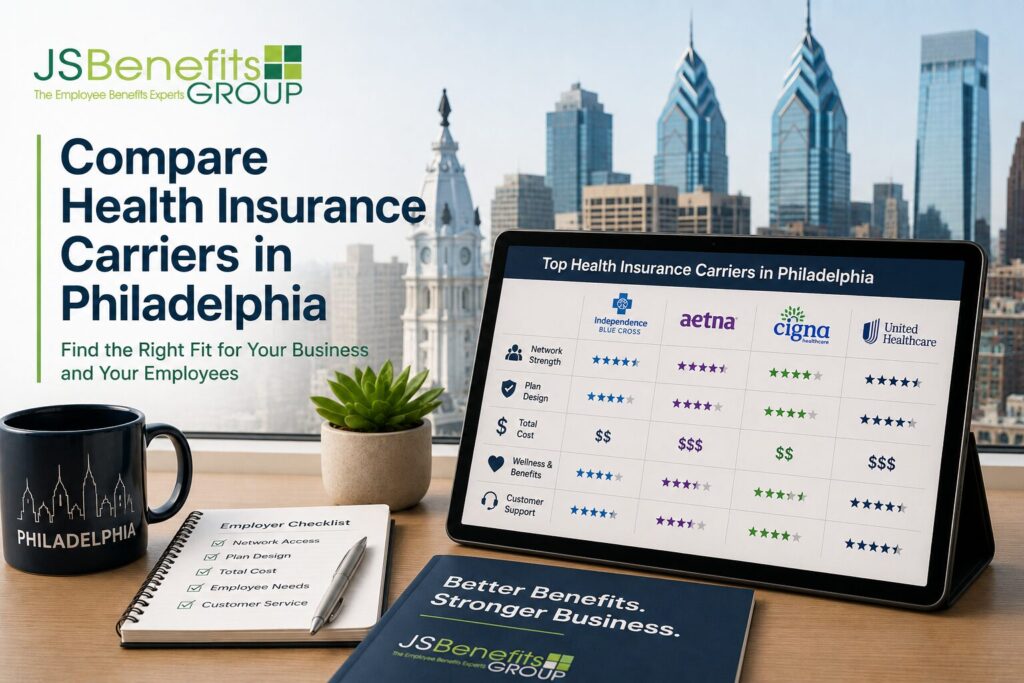

Quick Answer: Philadelphia employers should compare Independence Blue Cross, Aetna, Cigna, and UnitedHealthcare by reviewing provider networks, total cost, plan design, prescription coverage, employee locations, and carrier support. The best choice depends on employee needs, budget, access to care, and long-term benefits strategy, not just the lowest premium.
Why Carrier Selection Matters in 2026
In 2026, carrier selection should be treated as a strategic benefits decision, not just a renewal exercise. Healthcare costs, employee retention, prescription drug spending, remote work, and multi-state hiring all affect which carrier makes the most sense.
Employers should also avoid assumptions. A national carrier is not automatically better for every workforce, and a local carrier is not automatically too limited. The best carrier is the one that gives employees reasonable access to care while helping the business manage cost, communication, and long-term plan performance.
Carrier Comparison at a Glance
| Carrier | Potential Strength | What Employers Should Review |
| Independence Blue Cross | Strong local identity in Philadelphia and southeastern Pennsylvania | Local hospital access, regional network fit, employee familiarity, and plan options |
| Aetna | National carrier presence and employer plan options | Network availability, provider participation, plan design, and employee locations |
| Cigna | Employer health plan options and national account capabilities | Product availability, provider access, pharmacy coverage, and plan type |
| UnitedHealthcare | Broad employer plan portfolio and administrative tools | Pennsylvania commercial plan options, network fit, digital tools, and service support |
This table is only a starting point. Final carrier selection should be based on actual quotes, network disruption analysis, plan documents, employee census data, and renewal strategy.
Start With Provider Network Fit
Provider access is one of the most important parts of comparing health insurance carriers. Philadelphia employees may care about access to local doctors, pediatricians, hospitals, behavioral health providers, specialists, and urgent care locations.
Employees outside the city may care about provider access in Bucks County, Montgomery County, Delaware County, Chester County, South Jersey, Delaware, or other nearby areas. Remote employees may need broader access outside the region.
A lower premium may not help if employees lose access to the providers they use most. Employers should review whether key hospitals, specialists, primary care doctors, pediatricians, urgent care centers, and behavioral health providers are in network before making a carrier change.
Compare the True Cost, Not Just the Premium
Premiums matter, but they are only one part of the total cost. Employers should compare deductibles, copays, coinsurance, out-of-pocket maximums, prescription costs, employer contributions, employee payroll deductions, and expected utilization.
A plan with a lower monthly premium may shift more cost to employees when they use care. A plan with a higher premium may offer better predictability, lower deductibles, or stronger prescription coverage.
The best plan is not always the cheapest plan. It is the plan that balances affordability, access, employee value, and long-term cost control.
Review Prescription Drug Coverage
Prescription drug coverage can be a major cost driver for employers and employees. When comparing Independence Blue Cross, Aetna, Cigna, and UnitedHealthcare, employers should review each carrier’s pharmacy benefit structure.
This may include formularies, preferred pharmacies, specialty drug rules, prior authorization requirements, mail-order options, pharmacy benefit manager arrangements, and drug cost tools.
A carrier comparison that ignores pharmacy coverage can miss one of the biggest areas of employee frustration. Employees may accept a plan change more easily when their doctors remain in network, but they may still become frustrated if common medications become harder or more expensive to access.
Match Plan Design to Employee Needs
Different workforces need different plan designs. A younger workforce may prefer lower payroll deductions and telehealth access. A workforce with families may value pediatric care, predictable copays, and strong prescription coverage. Employees with chronic conditions may focus more on provider access, medication costs, and out-of-pocket limits.
Common plan design options may include PPO, HMO, EPO, high deductible health plans, HSA-compatible plans, copay-based plans, tiered networks, and multi-option plan menus.
Philadelphia employers should avoid copying another company’s plan without reviewing their own workforce. The right carrier and plan design should reflect employee needs, budget, recruiting goals, and how employees actually use care.
Consider Local and Multi-State Workforce Needs
Independence Blue Cross may be especially familiar to employees in Philadelphia and southeastern Pennsylvania. Aetna, Cigna, and UnitedHealthcare may appeal to employers that want national carrier options or have employees across multiple states.
That does not mean one approach is automatically better. A local or regional workforce may prioritize strong Philadelphia-area network access. A multi-state employer may need broader national coverage, stronger out-of-area support, and consistent benefits for employees in different locations.
Employers should map where employees actually live and work before comparing carriers. Location matters because network strength can change from one area to another.
Compare Employee Experience and Support
Employees judge health benefits by what happens when they need care. A carrier may look strong on paper, but employees may still struggle if the provider search tool is confusing, ID cards are delayed, claims are hard to understand, or customer service is difficult to reach.
Employers should compare member portals, provider search tools, mobile apps, claims support, ID card access, telehealth tools, care navigation, customer service, open enrollment materials, and employee education resources.
Employee experience affects how people feel about the benefits program. Better communication and easier support can reduce HR workload and improve satisfaction.
Review Administrative Fit for HR
Carrier choice affects HR and benefits administration, too. Employers should consider how each carrier works with payroll systems, benefits administration platforms, billing, eligibility updates, reporting, and broker support.
A plan that is hard to administer can create extra work for HR, even if the benefits look strong on paper. Employers should review how new hires are added, how terminations are handled, how billing works, what reports are available, and how quickly service issues are resolved.
Compare Renewal Strategy and Long-Term Cost Control
The first-year quote matters, but renewal strategy matters just as much. Employers should ask how each carrier handles renewals, claims data, utilization trends, pharmacy spend, and plan design recommendations.
A good carrier comparison should account for this year’s premium and the next several renewal cycles. Employers should look at available cost-control options, alternate plan designs, benchmarking, wellness tools, care management programs, and how clearly renewal increases are explained.
How JS Benefits Group Helps Philadelphia Employers Compare Carriers
JS Benefits Group is a Newtown-based employee benefits and HR consulting firm serving Philadelphia employers and businesses across the surrounding Pennsylvania region.
For employers comparing Independence Blue Cross, Aetna, Cigna, UnitedHealthcare, or other carrier options, JS Benefits Group can help review network fit, plan design, renewal strategy, employee contribution levels, pharmacy coverage, employee communication, and long-term cost management.
The goal is not simply to choose a carrier. The goal is to build a health benefits strategy that supports employees while helping the employer manage cost and complexity.
FAQs About Comparing Health Insurance Carriers in Philadelphia
Which health insurance carrier is best for Philadelphia employers?
There is no single best carrier for every Philadelphia employer. The best option depends on employee locations, provider networks, plan design, budget, prescription drug needs, and long-term renewal strategy.
Is Independence Blue Cross better for Philadelphia companies?
Independence Blue Cross has a strong local presence in Philadelphia and southeastern Pennsylvania, which may make it a strong option for some employers. Employers should still compare networks, costs, plan design, and employee needs before choosing.
Are Aetna, Cigna, and UnitedHealthcare good options for Philadelphia employers?
Aetna, Cigna, and UnitedHealthcare may be good options depending on the employer’s workforce, network needs, plan availability, and budget. Employers with multi-state employees may especially want to review national carrier options.
Should employers choose the lowest health insurance quote?
Not automatically. The lowest quote may come with higher deductibles, narrower networks, higher prescription costs, or more employee disruption. Employers should compare total cost and employee experience.
What is a network disruption analysis?
A network disruption analysis compares current employee provider usage against a new carrier’s network. It helps employers see whether employees may lose access to doctors, hospitals, or specialists if the company changes carriers.
How can JS Benefits Group help compare carriers?
JS Benefits Group helps Philadelphia-area employers compare carrier quotes, provider networks, plan designs, prescription drug coverage, employee contributions, and renewal strategy so they can make a more informed benefits decision.
Compare Carrier Options With a Clear Strategy
Choosing between Independence Blue Cross, Aetna, Cigna, and UnitedHealthcare is not just about finding the lowest premium. It is about choosing a carrier and plan design that fit your employees, budget, HR process, and long-term benefits strategy.
If your organization wants help comparing health insurance carriers, schedule a free benefits analysis with JS Benefits Group. Our team can help you review carrier options, identify potential disruption, and build a benefits strategy that supports your employees and your business.