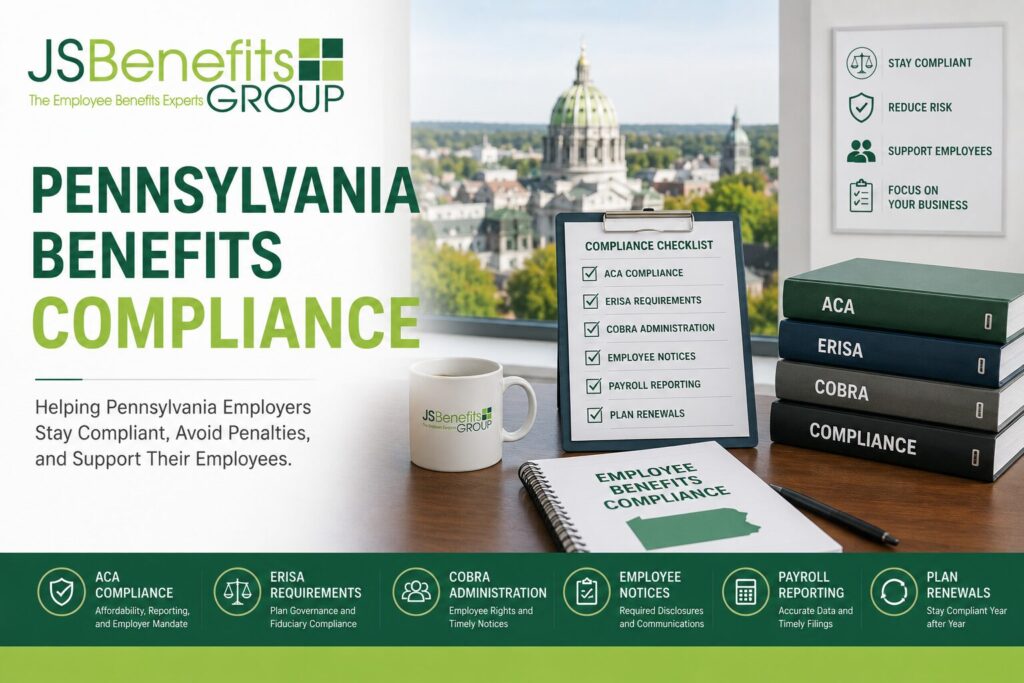

Quick Answer: Pennsylvania employers may need to follow employee benefits compliance rules for ACA reporting, ERISA plan documents, COBRA, employee notices, payroll deductions, eligibility, and plan renewals. The exact requirements depend on company size, plan type, workforce structure, and whether the plan is fully insured, level-funded, or self-funded. Employers should review compliance before renewal, open enrollment, hiring changes, or major benefits changes.
Common Employee Benefits Compliance Areas for Pennsylvania Employers
Employee benefits compliance can vary by employer, but most businesses should understand the major areas below.
| Compliance Area | What Employers Should Watch |
| ACA requirements | Employer size, full-time employee tracking, affordability, minimum value, and reporting obligations |
| ERISA documents | Plan documents, summary plan descriptions, notices, and fiduciary responsibilities |
| COBRA | Continuation coverage rules for certain employers and qualifying events |
| Employee notices | Required plan notices, open enrollment materials, SBCs, and other disclosures |
| Eligibility rules | Clear and consistent rules for who can enroll and when coverage begins |
| Payroll deductions | Accurate employee contributions and proper handling of pre-tax deductions |
| State requirements | Pennsylvania hiring, new hire reporting, and employment-related obligations |
| Plan changes | Clear communication when benefits, costs, carriers, or coverage rules change |
This is not a complete legal checklist. It is a practical starting point for employers who want to understand where common benefits compliance issues often appear.
ACA Compliance for Pennsylvania Employers
The Affordable Care Act, often called the ACA, is one of the biggest compliance areas employers ask about.
For applicable large employers, the ACA generally requires offering affordable health coverage that provides minimum value to full-time employees and their dependents. It also includes reporting requirements. An employer’s size is usually based on full-time employees and full-time equivalent employees.
This is why tracking employee hours matters. A company that is growing, hiring seasonal workers, adding part-time staff, or operating multiple related businesses may need to pay closer attention to how employees are counted.
Smaller employers may not have the same ACA employer mandate requirements, but they still need to understand how plan eligibility, employee contributions, and enrollment rules are being handled.
For Newtown and Bucks County employers, ACA compliance should be reviewed before renewal and during workforce changes. Waiting until a deadline arrives can make the process harder.
ERISA Plan Documents and Disclosures
ERISA is a federal law that applies to many employer-sponsored benefit plans. It sets rules for how plans are managed and how information is shared with employees.
Employers may need to maintain plan documents, provide summary plan descriptions, and give employees certain notices or disclosures. These documents explain how the plan works, who is eligible, what benefits are available, how claims are handled, and what rights employees have.
This is an area where many small businesses fall behind. They may have insurance policies and enrollment forms but not a complete plan document process.
A benefits consultant can help organize what documents exist, what may be missing, and what should be reviewed with legal or compliance professionals.
COBRA and Continuation Coverage
COBRA allows certain employees and dependents to continue group health coverage after specific events, such as job loss, reduction in hours, divorce, or other qualifying events.
In general, federal COBRA applies to group health plans maintained by employers with 20 or more employees, though employers should confirm how continuation coverage rules apply to their specific plan and workforce.
COBRA does not apply to every employer in the same way. Employer size and plan structure matter. However, when COBRA does apply, employers need to understand notice timing, qualifying events, election rights, payment rules, and communication requirements.
This is one reason clean records are important. If an employee leaves, changes hours, or loses eligibility, the business should know what happens next.
Even if a third-party administrator or carrier helps with COBRA, the employer still needs a process for identifying events and making sure the right information gets to the right place.
Required Notices and Employee Communication
Benefits compliance depends on clear communication.
Employees should receive important plan information at the right time. This may include open enrollment materials, summaries of benefits and coverage, plan notices, privacy notices, special enrollment information, and other required disclosures depending on the plan.
Many compliance problems begin with confusion. Employees may not know when they are eligible, what happens after a life event, how to add a dependent, or what changed at renewal.
Good communication can reduce mistakes and frustration.
For Pennsylvania employers, open enrollment is a good time to review whether employees are getting the right materials and whether the information is easy to understand.
Eligibility Rules and Consistent Administration
Eligibility rules should be clear, written down, and applied consistently.
This includes rules for full-time employees, part-time employees, waiting periods, rehires, dependents, new hires, and employees who change roles or hours.
Problems can happen when employers make exceptions without documenting them, apply rules differently between employees, or rely on informal decisions that are not reflected in plan documents.
A benefits consultant can help employers review eligibility rules and make sure they align with the plan, carrier requirements, and internal HR practices.
Consistency matters. It protects the business and helps employees understand what to expect.
Payroll Deductions and Pre-Tax Benefits
Employee benefits often involve payroll deductions. These deductions may include employee health insurance contributions, dental and vision premiums, FSA contributions, HSA contributions, or other voluntary benefits.
Employers need to make sure deductions are accurate, timely, and aligned with employee elections.
If employees pay premiums on a pre-tax basis, the business may also need a Section 125 cafeteria plan document. This is another area that can be overlooked when businesses add benefits quickly or change payroll systems.
Payroll, HR, benefits administration, and carrier billing should all match as closely as possible. Regular audits can help catch errors before they become larger problems.
Pennsylvania Employer Requirements That Can Affect Benefits Administration
Pennsylvania employers also have state-level responsibilities that can affect HR and benefits administration.
For example, employers must report newly hired or rehired employees who live or work in Pennsylvania. Employers should also stay aware of broader HR and payroll responsibilities, such as wage and hour rules, workers’ compensation, unemployment compensation, and employee recordkeeping.
These are not all benefits compliance rules, but they often connect with onboarding, payroll, and employee administration. For a small business, these responsibilities can overlap. That is why benefits compliance should not be treated as a once-a-year task. It should be part of a larger HR and employee management process.
Employee Benefits Compliance Review Checklist
Pennsylvania employers should regularly review the following items, especially before renewal, open enrollment, hiring changes, or a plan change:
| Item to Review | Why It Matters |
| Employee eligibility rules | Helps ensure benefits are offered consistently |
| ACA status and reporting | Helps determine whether employer mandate or reporting rules may apply |
| ERISA documents and SPDs | Helps employees understand plan rules, rights, and claims procedures |
| COBRA or continuation process | Helps manage coverage rights after qualifying events |
| Required notices and SBCs | Helps employees receive important plan information on time |
| Payroll deductions | Helps confirm employee contributions match elections |
| Section 125 documents | Helps support pre-tax premium deductions when applicable |
| Carrier and vendor records | Helps keep enrollment, billing, and plan administration aligned |
This checklist is not legal advice, but it can help employers identify which areas may need closer review with a benefits consultant, legal advisor, payroll provider, or tax professional.
Compliance Risks Often Show Up During Renewal
Renewal season is a common time for compliance issues to appear.
A business may discover that eligibility rules were unclear, employee contribution amounts were not updated correctly, required notices were missing, or employees were confused about their options.
A renewal review should look at more than the new rates. It should also review the way the plan is being administered.
Employers should ask:
Are our eligibility rules clear?
Are employee contributions accurate?
Do we have the right plan documents and notices?
Are employees receiving clear enrollment materials?
Are we tracking full-time status correctly?
Are we prepared for ACA reporting if it applies?
Are plan changes being communicated clearly?
These questions can help employers avoid rushed decisions and last-minute confusion.
How a Benefits Consultant Can Help With Compliance
A benefits consultant can help Pennsylvania employers build a more organized benefits process.
They may help review plan documents, coordinate open enrollment, explain carrier requirements, support employee communication, review contribution strategies, identify compliance questions, and work with other advisors when legal or tax guidance is needed.
For small businesses, this support can be valuable because the same person often handles HR, payroll, hiring, and benefits. A consultant gives that person a clearer process and a second set of eyes.
The goal is not to make benefits more complicated. The goal is to make the process easier to manage and less likely to create surprises.
How JS Benefits Group Helps Pennsylvania Employers
JS Benefits Group helps employers in Newtown, Bucks County, and across Pennsylvania with employee benefits consulting, group health insurance, HR support, compliance, renewals, open enrollment, and healthcare cost management.
Their process includes discovery, benefits analysis, benchmarking, strategy design, carrier market review, implementation, open enrollment support, and ongoing renewal guidance. That structure helps employers understand what their current benefits are costing, where gaps may exist, and what options may support a stronger long-term strategy.
For Pennsylvania employers, this kind of support can be especially helpful before renewal, during growth, when adding benefits for the first time, or when internal teams need a clearer way to manage compliance-related details.
FAQs About Employee Benefits Compliance in Pennsylvania
What employee benefits compliance requirements apply to Pennsylvania employers?
Pennsylvania employers may need to follow federal requirements related to ACA, ERISA, COBRA, employee notices, plan documents, eligibility rules, and benefits reporting. They may also need to manage state-level employer responsibilities, such as new hire reporting and other HR-related requirements.
Do small businesses in Pennsylvania have to follow ACA rules?
Some ACA requirements depend on employer size. Applicable large employers generally have more responsibilities related to offering coverage and reporting. Smaller employers may not have the same employer mandate, but they still need to manage plan eligibility, employee communication, and enrollment practices carefully.
What is ERISA and why does it matter for employee benefits?
ERISA is a federal law that applies to many employer-sponsored benefit plans. It requires employers and plan administrators to provide important plan information to employees and follow certain rules for managing benefit plans.
Does a benefits consultant replace legal counsel for compliance?
No. A benefits consultant does not replace legal counsel. However, a consultant can help employers stay organized, understand common benefits-related requirements, coordinate plan materials, and identify issues that may need legal or tax review.
When should Pennsylvania employers review benefits compliance?
Employers should review benefits compliance before renewal, during open enrollment, when hiring or growing, when changing carriers or plans, and when employee eligibility rules change. A yearly review can help catch issues before they become bigger problems.
Get Help With Employee Benefits Compliance in Pennsylvania
Employee benefits compliance can feel overwhelming, especially when you are also trying to manage costs, support employees, and run your business.
If you are a Pennsylvania employer in Newtown, Bucks County, or the surrounding region, JS Benefits Group can help you review your benefits program, understand where gaps may exist, and prepare for renewal with a clearer plan.
If your renewal is coming up, your benefits process feels disorganized, or you are unsure which compliance requirements may apply to your business, schedule a free benefits analysis with JS Benefits Group.