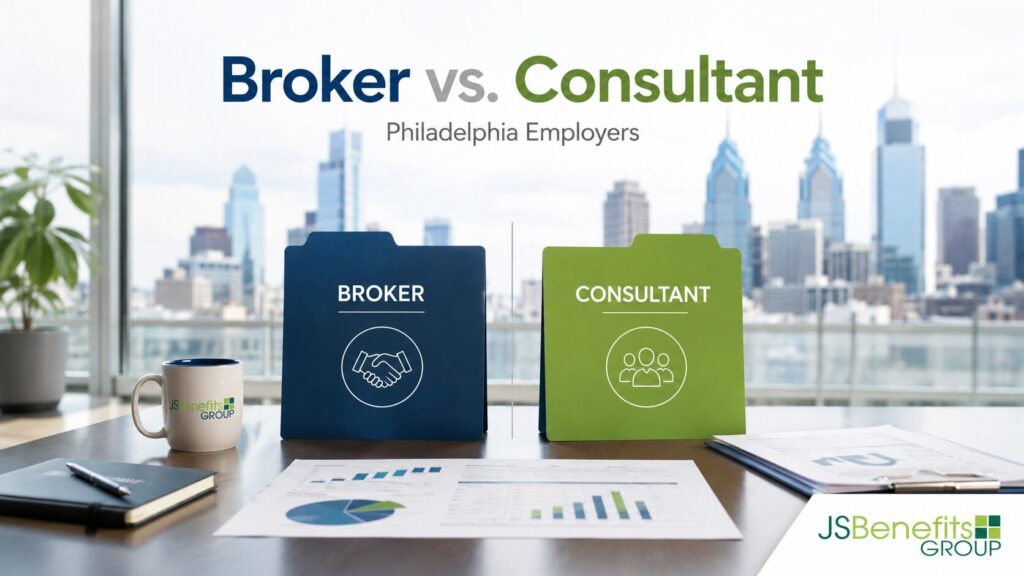

Quick Answer: A benefits broker helps Philadelphia employers compare and place employee benefits plans. A benefits consultant helps with broader strategy, cost control, plan design, compliance coordination, and employee communication. Brokers are usually focused on quotes, renewals, and carrier options. Consultants help employers decide whether those options fit their budget, workforce needs, and long-term goals. Some firms provide both brokerage and consulting support.
Why This Difference Matters in 2026
Employee benefits are no longer just a renewal task. Employers are dealing with rising healthcare costs, hybrid workforces, employee retention pressure, compliance questions, and workers who expect benefits to be easier to understand and use.
That means many Philadelphia businesses need more than basic plan shopping. They need guidance on plan design, contribution strategy, employee education, cost control, benefits communication, and long-term planning.
A broker can still be important, especially when it comes to carrier relationships and plan placement. But a consultant helps employers connect those plan decisions to larger business goals.
Benefits Broker vs. Benefits Consultant at a Glance
| Category | Benefits Broker | Benefits Consultant |
| Main role | Helps employers compare and place benefits plans | Helps employers build a benefits strategy |
| Primary focus | Insurance products and carrier options | Cost control, plan design, communication, and workforce goals |
| Common support | Quotes, renewals, carrier negotiations, plan placement | Strategy, benchmarking, employee education, compliance coordination |
| Best for | Employers that need help shopping or renewing coverage | Employers that need deeper guidance and long-term planning |
| Employee experience role | May help explain plan options during enrollment | Helps improve communication, understanding, and benefits engagement |
What Does a Benefits Broker Do?
A benefits broker helps employers shop for employee benefits coverage. This may include group health insurance, dental plans, vision plans, life insurance, disability insurance, and voluntary benefits.
A broker often works with insurance carriers to gather quotes, compare plan options, negotiate renewals, and help employers select coverage. For many small and mid-sized businesses, this is useful support. Employers may not have the time, carrier access, or plan knowledge to compare every option on their own.
A broker may help with carrier comparisons, renewal support, plan placement, and basic enrollment guidance. In Pennsylvania, insurance professionals who sell, solicit, or negotiate insurance generally need the proper licensing. Philadelphia employers should make sure any broker they work with is properly licensed and experienced with employer-sponsored benefits.
What Does a Benefits Consultant Do?
A benefits consultant takes a broader approach. Instead of only asking which plan is available, a consultant asks whether the benefits program supports the company’s goals.
A consultant may review the employer’s workforce, budget, plan design, contribution structure, communication gaps, compliance needs, and long-term cost strategy. This can be especially helpful for employers that are growing, hiring across multiple locations, managing high renewal increases, or seeing employees struggle to understand their benefits.
A consultant may help with healthcare cost management, plan design review, contribution strategy, HR consulting, open enrollment planning, benchmarking, wellness strategy, executive benefits, voluntary benefits, and employee communication.
The consultant’s role is not only to help employers choose a plan. It is to help employers understand how each benefits decision fits into the larger employee experience.
A benefits consultant can also help employers stay organized around common benefits and compliance questions. However, a consultant does not replace legal, tax, payroll, or compliance professionals when specific advice is needed.
Why Philadelphia Employers Should Care
Philadelphia employers operate in a competitive labor market. Many businesses are trying to attract and retain employees while managing healthcare costs and keeping benefits understandable.
A basic broker relationship may work if your company only needs help renewing coverage or comparing carrier options. But if your business is asking bigger questions, a consulting approach may be more useful.
For example, employers may need to know whether employees are using their benefits effectively, whether healthcare costs are rising faster than expected, whether the contribution strategy is still competitive, or whether employees are confused during open enrollment.
They may also need to know whether voluntary benefits fill real gaps, whether plan design matches the budget, and whether HR is spending too much time answering the same benefits questions.
Those are consulting questions, not just brokerage questions.
When a Benefits Broker May Be Enough
A benefits broker may be enough if your company has a simple benefits structure and mainly needs help with plan quotes, renewals, and carrier options.
This may be the case for a smaller business with basic group health coverage, limited plan complexity, and employees who understand the current benefits. A broker may also be enough if your company does not need much HR or compliance coordination and mainly wants help comparing plans at renewal.
A good broker can still provide real value. The issue is not whether brokers are helpful. The issue is whether brokerage support alone is enough for the size, complexity, and goals of your business.
When a Benefits Consultant May Be Better
A benefits consultant may be a better fit if your company needs deeper support.
This may be the case if your business is growing quickly, has multiple employee groups, is dealing with high renewal increases, wants to improve retention, or needs better benefits communication. It may also be the better fit if the company has employees in multiple locations, wants to review plan design, needs HR support, or wants stronger cost management.
A consultant can help employers move from reactive benefits decisions to a more intentional strategy. Instead of only asking, “What plan should we renew?” a consultant may ask, “What benefits strategy will help us support employees, manage costs, and stay competitive?”
Can One Firm Be Both a Broker and a Consultant?
Yes. Many employee benefits firms provide both brokerage and consulting services.
A firm may help employers compare carrier options while also providing strategy, employee education, plan design guidance, wellness planning, and cost management support. This can be helpful because the employer does not have to choose between plan access and strategic advice.
However, employers should still ask clear questions about the level of support they will receive. A strong benefits partner should be able to explain whether they only provide quotes or whether they also help review plan strategy, manage renewal increases, support employee communication, assist with open enrollment, review contribution strategy, and meet with the employer outside renewal season.
The answers can help you tell whether the relationship is mostly transactional or truly consultative.
Which Type of Benefits Partner Should You Choose?
| If Your Business Needs | Better Fit |
| Help comparing insurance quotes and carrier options | Benefits broker |
| A broader strategy for cost control, compliance coordination, and employee communication | Benefits consultant |
| Basic renewal and plan placement support | Benefits broker |
| Help with benchmarking, plan design, and long-term benefits planning | Benefits consultant |
| A partner who can place coverage and provide strategic guidance | A firm that offers both brokerage and consulting support |
For many Philadelphia employers, the best fit is not always one or the other. It may be a benefits partner that can access carrier options while also helping the business make smarter long-term benefits decisions.
What Philadelphia Employers Should Look For
When choosing a benefits broker or benefits consultant in Philadelphia, employers should look for a partner who understands local businesses, regional carrier options, employee expectations, and the broader Pennsylvania benefits landscape.
A strong benefits partner should help with plan comparison, renewal strategy, cost control, employee education, benefits administration questions, open enrollment communication, long-term planning, HR strategy, and retention goals.
Employers should also look for clear communication. Benefits can be confusing for employees, so the partner should be able to explain options in plain language. The best benefits partner is not just someone who brings a spreadsheet of plan options. It is someone who helps the employer make better decisions.
Common Mistakes Employers Make
One common mistake is choosing a broker or consultant based only on price. Cost matters, but low-cost support may not provide the guidance your business actually needs.
Another mistake is waiting until renewal season to review benefits. By then, employers may have less time to analyze options, communicate changes, or make strategic decisions.
Employers should also avoid assuming employees understand their benefits. Even a strong benefits package can feel weak if employees do not know how to use it.
A final mistake is treating benefits as separate from retention. Benefits are part of the employee experience. They can affect recruiting, morale, satisfaction, and whether employees see long-term value in staying with the company.
Questions to Ask Before Choosing a Benefits Partner
Before choosing a partner, Philadelphia employers should ask whether the firm is licensed to help place insurance coverage in Pennsylvania and whether it provides consulting support beyond quotes and renewals.
Employers should also ask how the partner helps control healthcare costs, supports open enrollment, improves employee understanding, handles common benefits questions, and measures whether the benefits strategy is working.
These questions help employers choose a partner based on value, not just plan access.
How JS Benefits Group Helps Philadelphia Employers
JS Benefits Group is a Newtown-based employee benefits and HR consulting firm that helps employers in the Philadelphia region review benefits options, manage healthcare costs, improve employee communication, support compliance coordination, and build stronger long-term benefits strategies.
For employers comparing a benefits broker and a benefits consultant, JS Benefits Group can help with both plan access and strategic guidance. That includes group health insurance review, renewal planning, benchmarking, plan design, voluntary benefits, open enrollment support, and ongoing benefits consulting.
Instead of only comparing quotes, the team helps employers understand how each decision affects the business, employees, budget, and long-term workforce goals.
FAQs About Benefits Brokers and Benefits Consultants
What is the main difference between a benefits broker and a benefits consultant?
A benefits broker usually helps employers compare and place benefits plans. A benefits consultant helps employers design a broader benefits strategy that supports cost management, communication, retention, and workforce goals.
Do Philadelphia employers need a benefits broker or consultant?
It depends on the company’s needs. A business that only needs help shopping coverage may need a broker. A business that needs cost management, plan design, communication, and long-term strategy may benefit from a consultant.
Can a benefits broker also be a consultant?
Yes. Many employee benefits firms provide both brokerage and consulting support. Employers should ask what services are included and how strategic the relationship will be.
What should employers ask before choosing a benefits broker or consultant?
Employers should ask whether the firm is licensed to help place insurance coverage in Pennsylvania, how it supports renewals, whether it provides consulting beyond quotes, how it helps control healthcare costs, how it supports employee communication, and how often it meets with clients outside renewal season.
Why does benefits consulting matter for employee retention?
Benefits consulting matters because employees often view benefits as part of their total compensation and workplace experience. A strong strategy can help employers offer benefits that are easier to understand, more competitive, and better aligned with employee needs.
Build a Stronger Benefits Strategy With JS Benefits Group
Choosing between a benefits broker and a benefits consultant is really about choosing the level of support your business needs.
Some Philadelphia employers need help comparing plans. Others need a deeper strategy for managing healthcare costs, supporting HR, improving employee communication, and strengthening retention.
If your organization wants a more strategic approach to employee benefits, schedule a free benefits analysis with JS Benefits Group. Our team can help you evaluate options, improve communication, and build a benefits strategy that fits your workforce.