
Choosing the right health insurance funding strategy is one of the most important decisions an employer can make. As healthcare costs continue to rise, many business owners are exploring alternatives to traditional fully insured health plans in search of greater cost control and transparency.
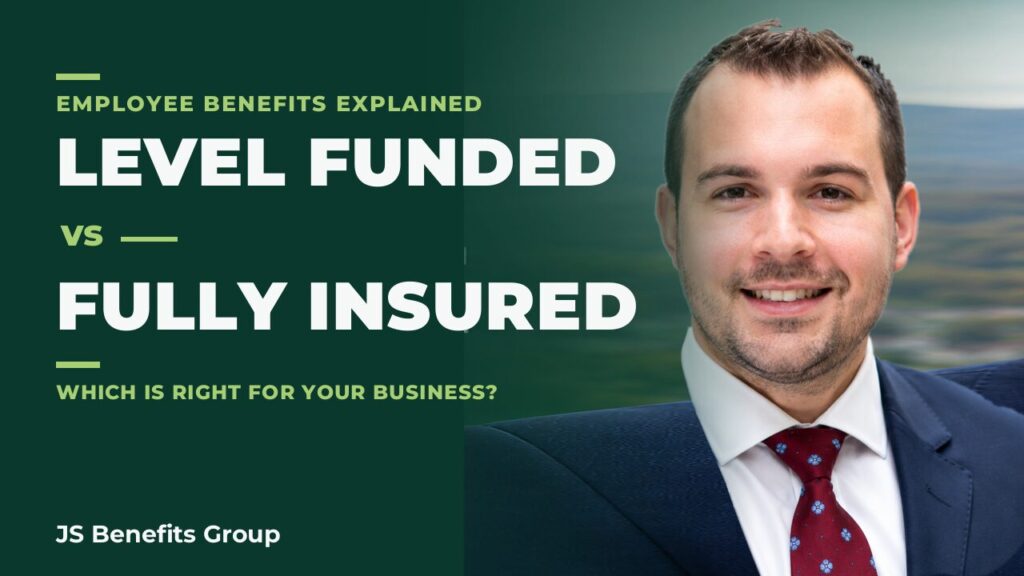
In this video, Bill Capece, Director of Business Development at JS Benefits Group, explains the key differences between Level Funded and Fully Insured health plans and what employers should consider when evaluating their options.
Watch the Video
https://www.youtube.com/watch?v=UUh-G-f2leY

What Is a Fully Insured Health Plan?
A fully insured health plan is the traditional approach most employers are familiar with. Employers pay a fixed monthly premium to an insurance carrier, and the carrier assumes the financial risk for employee healthcare claims.
Advantages of Fully Insured Plans
Predictable monthly costs
Simplified administration
Financial risk transferred to the insurance carrier
Familiar structure for employers and employees
Potential Drawbacks
Annual premium increases
Limited transparency into claims data
Employers pay premiums regardless of actual claims experience
Less flexibility in plan design and cost management
For many employers, fully insured plans provide stability. However, rising healthcare costs have led many organizations to explore alternative funding arrangements.
What Is a Level Funded Health Plan?
A level funded health plan combines features of both fully insured and self-funded health plans.
Employers make a fixed monthly payment that covers:
Estimated claims costs
Stop-loss insurance protection
Administrative fees
Unlike a fully insured plan, if claims are lower than expected, employers may receive a refund or surplus at the end of the plan year, depending on the carrier and program structure.

Advantages of Level Funded Plans
Potential Cost Savings
Employers with healthy employee populations may benefit from lower overall healthcare costs compared to traditional fully insured plans.
Claims Transparency
Many level funded arrangements provide access to claims data and reporting, allowing employers to better understand healthcare utilization trends.
Surplus Opportunities
If claims run lower than projected, employers may receive a portion of unused claim funds.
Cost Control
Employers often gain greater visibility into healthcare spending and opportunities to improve plan performance.
Potential Considerations
Level funded plans may not be the right fit for every employer. Factors such as workforce demographics, claims history, participation levels, and budget objectives should all be evaluated carefully.
Which Employers Should Consider Level Funding?
Level funded plans are often a strong option for:
Businesses with 10 to 250 employees
Employers seeking greater cost transparency
Organizations experiencing significant fully insured rate increases
Companies interested in long-term healthcare cost management
Each employer’s situation is unique, which is why a detailed analysis is critical before making a funding decision.
Level Funded vs. Fully Insured: A Quick Comparison
Feature Fully Insured Level Funded
Monthly Payment Fixed Fixed
Claims Transparency Limited Greater Visibility
Potential Refund No Possible
Risk Protection Carrier Assumes Risk Stop-Loss Protection Included
Cost Control Opportunities Limited Greater Flexibility
Budget Predictability High High
Why More Employers Are Exploring Alternative Funding Strategies
Healthcare costs remain one of the fastest-growing expenses for employers. Many organizations are looking beyond traditional renewals and exploring funding models that offer greater transparency, accountability, and cost containment opportunities.
Level funded plans have become an increasingly popular option because they provide many of the benefits of self-funding while maintaining predictable monthly costs.
Speak With a Benefits Consultant
Wondering whether a level funded health plan could help your organization reduce healthcare costs?
The team at JS Benefits Group helps employers evaluate funding options, improve plan performance, and develop long-term healthcare cost management strategies.
Schedule a Complimentary Benefits Consultation
Whether you’re reviewing your current renewal or exploring alternative funding options, our team can help you determine the best strategy for your organization.
👉 Request a Consultation:
https://jsbenefitsgroup.com/request-consultation-form-group-health-benefits/
👉 Learn More About Employee Benefits Solutions:
https://jsbenefitsgroup.com/employee-benefits-solutions/
Jennifer Schaefer, MBA, CFS, CLU, ChFC, RHU, REBC, SHRM-SCP
Founder & CEO, JS Benefits Group | Forbes Business Council Contributor | Co-Host of Executive Leaders Radio
Helping employers navigate employee benefits, healthcare costs, compliance, and The Future of Work.