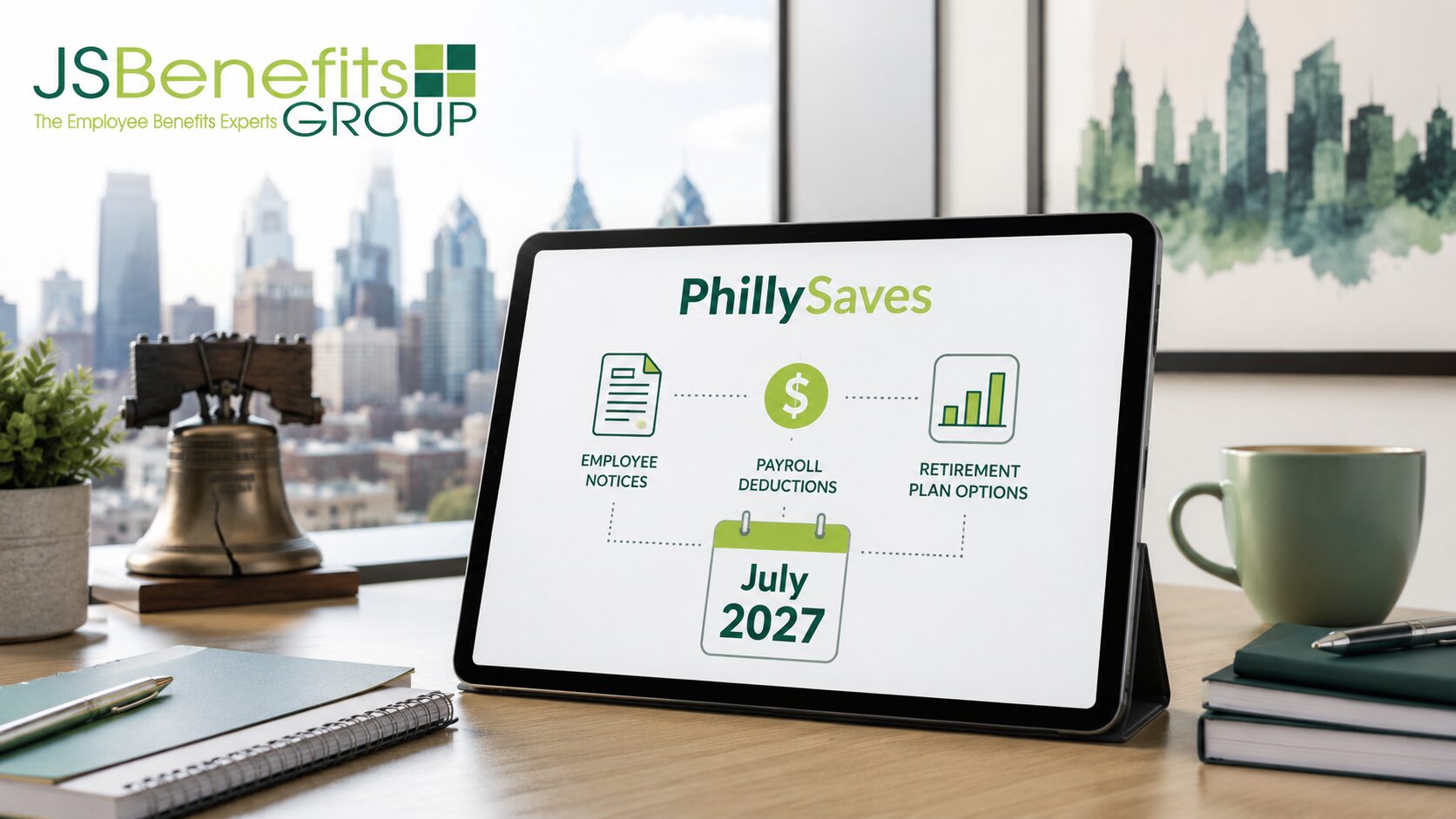
Quick Answer: PhillySaves is Philadelphia’s automatic retirement savings program for eligible workers whose employers do not offer a qualified retirement plan. Covered employers may need to prepare for registration, payroll deductions, employee notices, and opt-out communication before July 2027. Employers should review whether they already offer a qualified plan or whether PhillySaves or another retirement option is the better fit.
Why Philadelphia Employers Should Prepare Now
Philadelphia employers should start preparing before the July 2027 contribution target. Waiting until the deadline could create unnecessary confusion for HR, payroll, and employees.
The first step is to determine whether your business already offers a qualified retirement plan. If your company offers a 401(k), SIMPLE IRA, SEP IRA, pension, or another qualifying arrangement, you may not need to enroll employees in PhillySaves.
If your company does not offer a qualified retirement plan and has covered employees in Philadelphia, you should begin reviewing payroll systems, employee communication, and retirement plan options. Some employers may decide PhillySaves is enough for now. Others may decide this is the right time to explore a 401(k), SIMPLE IRA, or another employer-sponsored retirement option that gives the company more control over plan design, employer contributions, and employee experience.
PhillySaves at a Glance
| Topic | What Philadelphia Employers Should Know |
| Program name | Philadelphia Retirement Savings Program, also known as PhillySaves |
| Main purpose | Help workers without workplace retirement plans save through payroll deductions |
| Who it affects | Covered Philadelphia employers that do not offer a qualified retirement plan |
| Employee enrollment | Eligible employees are automatically enrolled unless they opt out |
| Employer role | Facilitate payroll deductions and follow program requirements |
| Employer contributions | PhillySaves is designed as an employee-funded savings program |
| Default contribution | The initial default contribution rate is expected to be between 3% and 6% |
| Account type | Contributions go into an IRA, with Roth IRA as the default unless the participant elects otherwise |
| Investment guarantee | The program does not guarantee any rate of return or interest rate |
| Start timing | Implementation is expected in 2027, with July 1, 2027 commonly cited as the contribution start target |
Which Employers May Be Covered by PhillySaves?
Philadelphia employers may be covered if they have covered employees in the city, have operated in Philadelphia long enough to fall under the program, and do not offer a qualified retirement plan.
City Council’s public summary says participating employees must work for Philadelphia businesses that have operated for at least two years and do not currently offer retirement benefits. Employers should confirm final coverage, registration, and implementation rules through official PhillySaves guidance as the program moves toward launch.
Employers should not assume they are exempt without reviewing their current benefits, employee locations, payroll systems, length of Philadelphia operations, and official program guidance.
What Counts as a Qualified Retirement Plan?
A qualified retirement plan is generally an employer-sponsored retirement plan that satisfies applicable rules. This may include a 401(k), SIMPLE IRA, SEP IRA, pension plan, or another qualifying retirement arrangement.
Employers that already offer a qualified retirement plan may not need to facilitate PhillySaves for covered employees. However, employers should review their plan carefully. It is important to confirm whether the plan is active, available to the right employees, and properly documented.
If there is uncertainty, employers should speak with a retirement plan advisor, benefits consultant, payroll provider, or legal advisor before assuming they are exempt.
What Type of Account Does PhillySaves Use?
PhillySaves is designed as an automatic IRA program. Employee contributions are deposited into individual retirement accounts through payroll deductions.
The default account type is expected to be a Roth IRA unless the participant elects otherwise. That means employees may contribute after-tax dollars by default, subject to applicable IRA rules and limits.
Participants may be able to choose a traditional IRA or use both account types depending on final program procedures. Employers should watch for official guidance before explaining account details to employees.
What Employers Need to Do Before July 2027
Philadelphia employers should use the time before July 2027 to prepare. The most important steps are to confirm whether the business has covered employees in Philadelphia, determine whether the company has operated in Philadelphia for at least two years, review whether a qualified retirement plan is already in place, and confirm whether payroll systems can support retirement deductions.
Employers should also watch for official registration guidance, decide whether to use PhillySaves or offer their own retirement plan, prepare employee communication materials, train HR or payroll staff, and coordinate with payroll, benefits, and outside advisors.
The goal is to avoid last-minute confusion. Payroll deductions, employee notices, opt-outs, and retirement plan decisions all take time to organize.
PhillySaves vs. Employer-Sponsored Retirement Plans
PhillySaves may be useful for employers that do not currently offer a retirement plan and are not ready to create one. But it is not the same as an employer-sponsored retirement plan.
| Option | How It Works | Employer Consideration |
| PhillySaves | Employees contribute through payroll deductions into program IRAs | Employer facilitates deductions but does not design the plan |
| 401(k) plan | Employer sponsors a retirement plan with employee contributions and optional employer contributions | More control, but more administration and plan responsibilities |
| SIMPLE IRA | Retirement option often used by smaller employers | May be easier than a 401(k), but has rules and contribution requirements |
| SEP IRA | Employer-funded retirement option often used by small businesses | Employer controls contributions, but employees do not make salary deferrals |
The right approach depends on the employer’s size, budget, workforce, payroll systems, and retention goals.
Should Employers Use PhillySaves or Start Their Own Plan?
Some Philadelphia employers may decide to use PhillySaves because it provides a basic savings option for employees without requiring the employer to sponsor a full retirement plan.
Other employers may decide that offering their own retirement plan is a better long-term strategy. An employer-sponsored plan may provide more plan design flexibility, potential employer contributions, stronger recruiting value, better retention support, and more control over the employee experience.
PhillySaves may help employers meet a basic requirement, but a company-sponsored retirement plan may provide more value as part of a competitive benefits package.
How PhillySaves May Affect Payroll and HR
PhillySaves will likely require coordination between HR, payroll, and any outside payroll provider. Employers may need to send employee information, process payroll deductions, update records, and manage employee questions.
Payroll accuracy will matter. Employees will expect deductions to be handled correctly and clearly. Employers should confirm whether their payroll system can support PhillySaves deductions, how opt-outs and contribution changes will be handled, what employee data may need to be shared, how records will be stored, and what reports HR may need to review.
What Employees Need to Know
Employees will need simple, direct communication about what PhillySaves means for them. Employers should explain what PhillySaves is, whether the company is participating, whether employees may be automatically enrolled, how employees can opt out, how payroll deductions may work, whether the company contributes, and what type of account may be used.
Employees may be confused if they hear “retirement program” and assume the employer is creating a 401(k). Employers should explain the difference clearly.
Swipe Copy Template: Employee PhillySaves Notice
Subject: Update About PhillySaves and Retirement Savings
Hi Team,
Philadelphia is launching a retirement savings program called PhillySaves for eligible workers who do not have access to an employer-sponsored retirement plan.
We are reviewing what this means for our company and our employees before the program begins. PhillySaves is designed to help eligible employees save for retirement through payroll deductions into individual retirement accounts.
Eligible employees may be automatically enrolled unless they opt out. Contributions would come from employee payroll deductions. The initial default contribution rate is expected to be set between 3% and 6%, and accounts are expected to default to Roth IRAs unless the participant elects otherwise. The program does not guarantee any rate of return or interest rate.
You do not need to take action right now. We will share more details before any employee action is required.
If you have questions, please contact HR.
Common Mistakes Employers Should Avoid
One common mistake is waiting too long to prepare. July 2027 may seem far away, but payroll changes, employee communication, and retirement plan decisions can take time.
Another mistake is assuming PhillySaves does not apply. Employers should review their retirement benefits, employee locations, length of Philadelphia operations, and official program guidance before making that decision.
Employers should also avoid confusing PhillySaves with a company-sponsored retirement plan. PhillySaves is a city-facilitated savings program. A 401(k) or other employer-sponsored plan may offer more flexibility and value, but it also comes with more responsibility.
How JS Benefits Group Helps Philadelphia Employers Prepare
JS Benefits Group is a Newtown-based employee benefits and HR consulting firm serving Philadelphia employers and businesses across the surrounding Pennsylvania region.
For employers preparing for PhillySaves, JS Benefits Group can help review current benefits, compare retirement plan options, coordinate with payroll, support employee communication, and help employers decide whether PhillySaves or an employer-sponsored retirement plan makes more sense.
The goal is not just to meet a requirement. The goal is to build a benefits strategy that supports employees, helps with retention, and fits the business.
FAQs About PhillySaves
What is PhillySaves?
PhillySaves is Philadelphia’s automatic retirement savings program for workers whose employers do not offer a qualified retirement plan. Eligible employees can save through payroll deductions and may opt out.
When does PhillySaves start?
The program is expected to begin implementation in 2027, with July 1, 2027 commonly cited as the contribution start target. Employers should watch for official guidance on registration, timing, and phased implementation.
Does PhillySaves require employer contributions?
PhillySaves is designed as an employee-funded retirement savings program. Employers generally facilitate payroll deductions rather than contribute to employee accounts.
Is PhillySaves the same as a 401(k)?
No. PhillySaves is not the same as an employer-sponsored 401(k). A 401(k) is sponsored by the employer and may include employer contributions, plan design choices, and additional administrative responsibilities.
How can JS Benefits Group help with PhillySaves?
JS Benefits Group helps Philadelphia-area employers review current benefits, evaluate retirement plan options, coordinate communication, and decide how PhillySaves fits into a broader employee benefits strategy.
Prepare for PhillySaves Before July 2027
PhillySaves will create a new retirement savings option for many Philadelphia workers and new responsibilities for covered employers that do not offer qualified retirement plans.
Philadelphia employers should use the time before July 2027 to review their retirement benefits, payroll systems, employee communication, and long-term benefits strategy.
If your organization wants help preparing for PhillySaves, schedule a free benefits analysis with JS Benefits Group. Our team can help you evaluate your current benefits, compare retirement plan options, and decide what approach makes the most sense for your workforce and your business.