
Healthcare costs continue to rise, forcing employers to make difficult decisions about their employee benefits. Too often, organizations assume the only way to reduce costs is by increasing deductibles, raising employee contributions, or reducing coverage.
Fortunately, there is another option.
A Health Reimbursement Arrangement (HRA) can help employers manage healthcare expenses while continuing to offer competitive benefits that employees value.
Watch Our Video
How an HRA Can Help Reduce Healthcare Costs
▶️ https://youtu.be/Td7TTZb8XvY
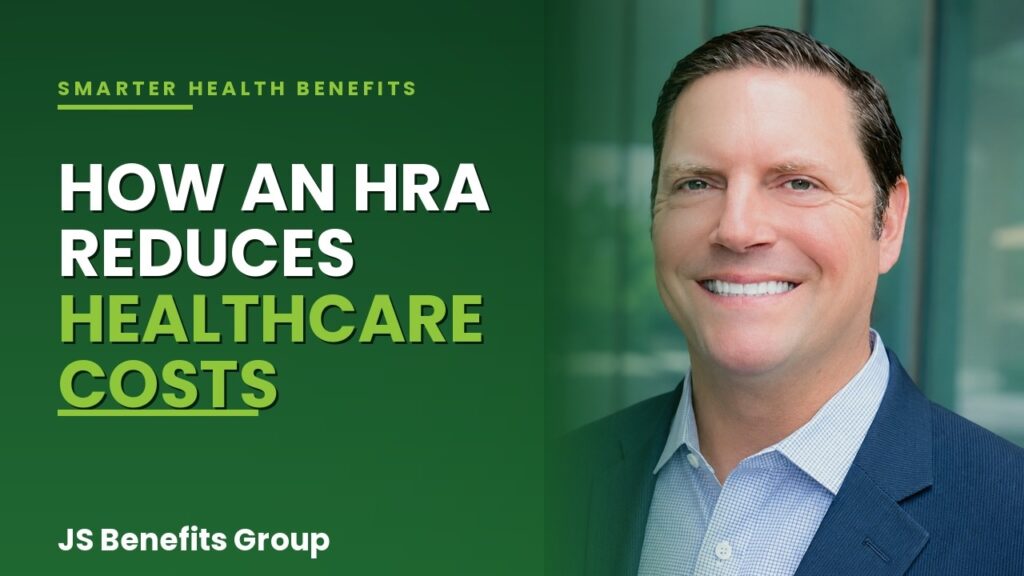
In this video, Rob Capone, Senior Employee Benefits Consultant at JS Benefits Group, explains how HRAs can become part of a smarter benefits strategy for employers looking to better manage healthcare costs.
What Is an HRA?
A Health Reimbursement Arrangement (HRA) is an employer-funded benefit that reimburses employees for eligible medical expenses and, in some cases, health insurance premiums depending on the type of HRA.
Unlike a Health Savings Account (HSA), employees do not contribute to an HRA. The employer determines the reimbursement amount and eligible expenses, creating greater flexibility and cost predictability.
HRAs can be customized to fit the needs of both the employer and the workforce.
Why Employers Are Considering HRAs
Healthcare costs remain one of the fastest-growing operating expenses for many businesses.
Rather than simply shifting more costs to employees, employers are increasingly looking for strategies that balance affordability with employee satisfaction.
An HRA may help employers:
- Better manage healthcare spending
- Improve budget predictability
- Reduce the impact of rising insurance premiums
- Support employee recruitment and retention
- Maintain competitive benefits without unnecessary plan changes
When incorporated into an overall benefits strategy, an HRA can provide employers with additional flexibility while helping employees manage out-of-pocket healthcare expenses.
HRAs Work Best as Part of a Strategic Benefits Plan
Every employer’s workforce is different.
Factors such as company size, employee demographics, claims experience, and financial goals all influence whether an HRA is an appropriate solution.
That is why HRAs should be evaluated alongside other healthcare funding strategies, including traditional fully insured plans, level-funded health plans, and self-funded arrangements.
A thoughtful analysis helps employers determine which approach best aligns with their long-term objectives.
Compare Before You Make Changes
Before making changes to your employee benefits, it’s important to understand how your healthcare costs compare to similar employers.
Use our Employee Benefits Benchmark Calculator to compare your current healthcare costs with national employer benchmark data.
👉 https://jsbenefitsgroup.com/employee-benefits-benchmark-calculator/
Explore Your Options
If you’re evaluating ways to better manage healthcare costs while maintaining competitive employee benefits, JS Benefits Group can help.
Learn more about our:
- Employee Benefits Solutions
https://jsbenefitsgroup.com/employee-benefits-solutions/ - Level-Funded Health Plans
https://jsbenefitsgroup.com/level-funded-health-plans/
Or request a complimentary consultation to discuss your organization’s employee benefits strategy:
👉 https://jsbenefitsgroup.com/request-consultation-form-group-health-benefits/
About Jennifer A. Schaefer
Jennifer A. Schaefer, MBA, CLU, ChFC, RHU, REBC, SHRM-SCP is the Founder & CEO of JS Benefits Group, an employee benefits consulting firm helping employers reduce healthcare costs through strategic plan design, compliance guidance, and innovative funding solutions. Jennifer is a Forbes Business Council contributor and Co-Host of Executive Leaders Radio, where she shares insights on employee benefits, healthcare strategy, and the future of work.
Ready to benchmark your healthcare costs?
Start with our free Employee Benefits Benchmark Calculator:
https://jsbenefitsgroup.com/employee-benefits-benchmark-calculator/
JS Benefits Group
https://jsbenefitsgroup.com