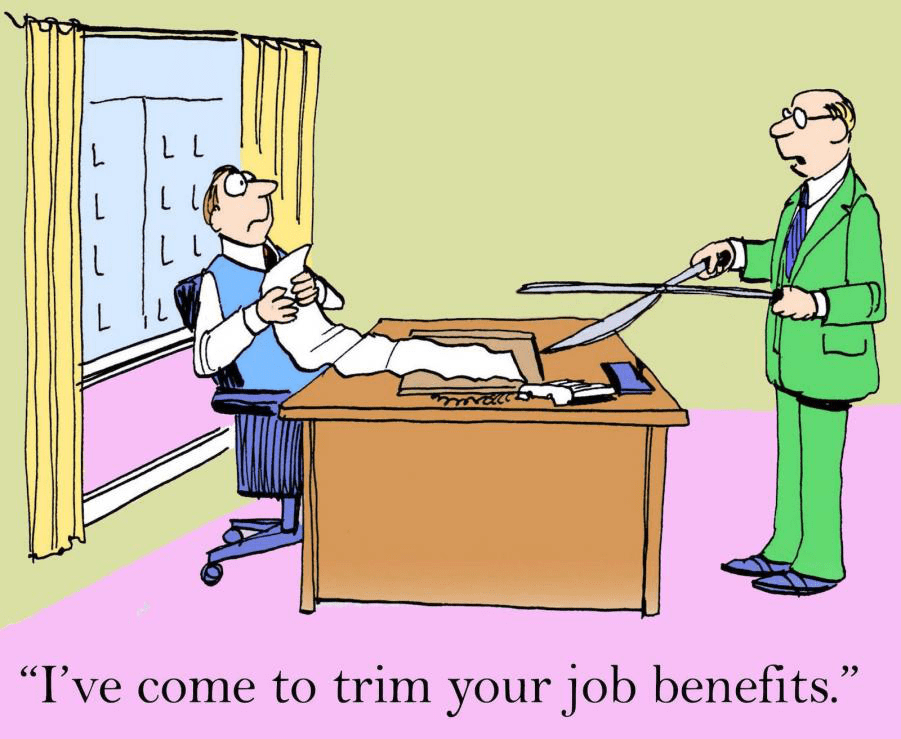
Your Benefits Broker Should Save You More Than They Cost.
Most employers overpay for benefits — not because they’re careless, but because they don’t have an expert in their corner at renewal time. JS Benefits Group delivers measurable, documented savings through smarter plan design, aggressive carrier negotiation, and compliance that prevents costly mistakes.

The Numbers Are Staggering.
Healthcare costs are projected to rise 7–8% in 2026, yet 67% of employers renew without ever shopping the market — because carriers count on that inertia. We don’t let that happen. From level-funded plan design to ACA compliance, our clients typically save 15–30% in year one — and every service is included at no additional cost.

Real Employers. Real Savings.
A Pennsylvania manufacturer with 145 employees saved $187,000 in year one. A New Jersey firm avoided $94,500 in IRS penalties. A Delaware healthcare organization reduced premiums by 22% — while employees actually preferred the new plan.

Find Out What You’re Leaving on the Table.
A free benefits analysis takes less than an hour and shows you exactly what your current plan is costing you — and what a smarter strategy would save. No pressure. No obligation. Just numbers.

Submit the form on the left or click here for more information.

Your Benefits Broker Should Save You More Than They Cost.
Most employers overpay for benefits — not because they’re careless, but because they don’t have an expert in their corner at renewal time. JS Benefits Group delivers measurable, documented savings through smarter plan design, aggressive carrier negotiation, and compliance that prevents costly mistakes.

The Numbers Are Staggering.
Healthcare costs are projected to rise 7–8% in 2026, yet 67% of employers renew without ever shopping the market — because carriers count on that inertia. We don’t let that happen. From level-funded plan design to ACA compliance, our clients typically save 15–30% in year one — and every service is included at no additional cost.

Real Employers. Real Savings.
A Pennsylvania manufacturer with 145 employees saved $187,000 in year one. A New Jersey firm avoided $94,500 in IRS penalties. A Delaware healthcare organization reduced premiums by 22% — while employees actually preferred the new plan.

Find Out What You’re Leaving on the Table.
A free benefits analysis takes less than an hour and shows you exactly what your current plan is costing you — and what a smarter strategy would save. No pressure. No obligation. Just numbers.

Submit the form on the left or click here for more information.

About Jennifer Schaefer

Jennifer Schaefer, MBA, CLU, CHFC, RHU, REBC, SHRM-SCP – Employee Benefits Expert | HR Leader | Certified Corporate Wellness Specialist I help businesses lower healthcare costs, implement level funded and self-funded plans, and create benefits programs that attract and retain top talent. Featured in the Philadelphia Inquirer and BestofHR.
25 08, 2017

5 tough problems that HR personnel need to be on top of

By |2022-08-16T11:46:40-04:00August 25th, 2017|Categories: HR, HR|

It’s very easy for us to believe that a firm’s HR department is this robotic, well oiled machine which is able to perform all of their tasks with almost perfect tenacity. Truth is, however, that they suffer from the same human weaknesses the rest of us do.  This is more pertinent for smaller businesses that don’t really have an experienced HR department to carry out their heavy lifting. Here are five reasons why;

1) The ever […]

24 08, 2017

Why your business needs an HR department

By |2022-08-16T11:46:40-04:00August 24th, 2017|Categories: HR, HR|

If your business is still in its cradle, it might be tempting to forego having an HR department entirely and perform some of the rather complex managerial tasks entirely on your own – tasks that usually fall in the exclusive domain of a human resource team. They spend four years acquiring a business degree studying human resources management for a reason.

Here are five reasons why you should get yourself an HR team and rid yourself […]

23 08, 2017

HR degree needed for HR job?

By |2022-08-16T11:46:40-04:00August 23rd, 2017|Categories: HR, HR|

As is the case with many jobs on the market today, a degree requirement is simply a means to an end. Most successful companies can attest to the fact that a degree doesn’t really produce skilled labor – in fact, talent is the only ‘skill’ you need in order to secure most jobs.

Why then is a degree a requirement for most jobs?

Sounds nice to have “Dr.” next to your name doesn’t it?

The answer to put […]

22 08, 2017

Five common problems facing employees at the workplace

By |2018-01-04T16:40:05-05:00August 22nd, 2017|Categories: HR|

You won’t achieve perfection at the workplace and keep everyone satisfied and performing at their peak working condition all the time. What is expected of you, however, is to minimize their problems as far as is remotely possible and cut back your losses.

Here are the top 5 reasons why your employees could be facing bouts of decreased productivity;

1) Major upheavals in personal life

Your employees have a life outside of their work too even […]

18 08, 2017

The importance of showing appreciation to your staff

By |2018-01-04T16:40:07-05:00August 18th, 2017|Categories: HR|

Job satisfaction is at the core of the reward system for most workers. The salary is just a means to an end – the real reward system in the brain gets kicked off when you show appreciation to your employees through intangible means. The value of these rewards really cannot be measured by the number of dollar bills. Don’t just put them off with a formal, meaningless, undervalued “thank you for your […]

8 08, 2017

How HR can sort out difficult employees

By |2022-08-16T11:46:41-04:00August 8th, 2017|Categories: HR, HR|

As an HR executive, it is your duty to lend a concerning ear to discontent employees and try to sort out their issues before the cesspool of their problems spills over into the business itself. It is important to understand that the employee’s negative behavior is not necessarily directed at you – there could be professional work or personal related problems which allows their disruptive behavior to permeate through their otherwise professional work […]

2 08, 2017

Why health insurance is necessary to retain employees

By |2018-01-04T16:40:10-05:00August 2nd, 2017|Categories: HR|

There’s a reason why fewer than half the American public views the drug companies in a positive light. Pharmaceutical companies often times place importance of the product before that of the customer, hiking the price often times by a factor of 1000; in 2015 Martin Shkreli, the big villain of the pharmaceutical industry made headlines when he increased the price of a generic drug , Darapim – an essential drug used by AIDS patients to […]

18 07, 2017

Key Person Insurance Policy

By |2018-01-04T16:40:11-05:00July 18th, 2017|Categories: HR|

Key person insurance is the life and disability insurance policy on an important employee on whom the successful operations of a business depends. The beneficiary of this policy is the business in question, and it is procured for business partners, proprietors or owners. Small businesses usually have only a few key employees, who are typically the founders. Without these personnel, the business will lose its worth and their absence would affect the success of the company.

Who Is a Key Person

In […]

17 07, 2017

Family and Individual Health Insurance Plan Options

By |2026-05-01T01:48:56-04:00July 17th, 2017|Categories: HR|

Family and Individual Health Insurance Plan Options

Choosing a health insurance plan usually comes down to a few important questions. Can you afford the monthly premium? Are your doctors in the plan’s network? Are your prescriptions covered? How much would you pay before insurance starts helping with larger medical bills?

For individuals and families, the right health insurance plan should balance access, cost, and coverage. A low monthly premium may look affordable at first, but the total value of a plan depends on the deductible, provider network, prescription coverage, copays, coinsurance, and out-of-pocket costs.

Understanding the most common types of health insurance plans can help you compare your options with more confidence.

What Should You Look for in a Health Insurance Plan?

Before choosing a plan, check the full cost and coverage details. The premium matters, but it is only one part of the decision.

You should also look at the deductible, copays, coinsurance, provider network, prescription drug coverage, referral rules, and out-of-pocket maximum. These details can affect how much you pay when you visit a doctor, fill a prescription, see a specialist, go to urgent care, or need hospital treatment.

It is also important to check whether your preferred doctors, hospitals, specialists, and pharmacies are in network. If you take regular medications, look over the plan’s prescription drug list before enrolling. A plan may look affordable until you discover that your doctor is out of network or your medication is not covered the way you expected.

Catastrophic Health Plans

Catastrophic health plans are designed for people who want protection from very high medical costs. These plans usually have lower monthly premiums, but they also come with high deductibles.

That means you may pay more out of pocket before the plan begins covering many services. For that reason, catastrophic plans may not be the best choice for someone who expects frequent doctor visits, ongoing prescriptions, regular specialist care, or planned medical treatment.

A catastrophic plan may make sense for someone who is generally healthy, wants a lower monthly premium, and mainly wants protection in case of a serious illness, major injury, or unexpected medical emergency. These plans can still include certain preventive services and limited primary care benefits before the deductible is met, but eligibility and coverage details can vary.

Before choosing a catastrophic plan, make sure you understand the deductible, what services are covered before the deductible, whether your doctors are available, and whether you qualify for this type of coverage.

Preferred Provider Organization Health Plans

A Preferred Provider Organization, commonly called a PPO, gives members access to a network of doctors, hospitals, specialists, pharmacies, and other medical providers. You usually pay less when you use providers inside the plan’s network, but PPO plans often allow you to use out-of-network providers at a higher cost.

PPO plans are often attractive to people who want more flexibility. Depending on the plan, you may be able to see specialists without getting a referral from a primary care doctor. This can be helpful if you already have preferred doctors, travel often, need specialist care, or want more control over where you receive treatment.

The tradeoff is cost. PPO plans may have higher monthly premiums than more restrictive network plans. Out-of-network care can also be expensive, and some services may still require prior authorization or have separate cost-sharing rules.

Before choosing a PPO plan, compare the provider network, deductible, copays, coinsurance, prescription drug coverage, out-of-network costs, and out-of-pocket maximum.

Health Maintenance Organization Health Plans

A Health Maintenance Organization, commonly called an HMO, usually requires members to receive care from doctors, hospitals, and other providers within the plan’s network. Except for emergencies and certain limited situations, care from providers outside the HMO network may not be covered.

HMO plans often require you to choose a primary care physician. This doctor helps coordinate your care and may need to provide a referral before you can see a specialist. For some families, this structure can make healthcare easier to manage. For others, it may feel limiting if they want direct access to a wider range of providers.

One advantage of an HMO plan is that it may offer lower monthly premiums or more predictable costs than some broader-network plans. Many HMO plans also include prescription drug coverage, but covered medications, pharmacy rules, copays, and prior authorization requirements can vary by plan.

Before choosing an HMO, confirm that the care team and facilities you use most often are included. If you are comfortable staying within that network, an HMO may be a practical option.

PPO vs. HMO: Which One Is Better?

A PPO may be better if you want more provider flexibility, want the option to see out-of-network doctors, or prefer not to rely on referrals for specialist care.

An HMO may be better if you are comfortable using a specific network of providers and want a plan that may have lower or more predictable costs.

Neither option is automatically better for every person. The right choice depends on how you use healthcare, which providers you want access to, and how much flexibility you need.

Common Mistakes to Avoid When Choosing a Health Insurance Plan

One common mistake is choosing the cheapest-looking plan without reviewing the full cost. If the deductible is high or your doctors are out of network, your total healthcare costs may be higher than expected.

Another mistake is not checking prescription coverage. If you or a family member takes regular medication, make sure the medication is covered and check the expected copay or coinsurance.

It is also important not to assume that every doctor or hospital accepts every plan. Provider networks can vary by insurance company, plan type, and location. Always check the network before enrolling.

Finally, do not overlook the out-of-pocket maximum. This is the most you would generally pay for covered in-network care during the plan year. For families or individuals with ongoing medical needs, this number can be just as important as the premium or deductible.

How JS Benefits Group Can Help

Choosing a health insurance plan should be based on more than a quick price comparison. The best plan for you depends on your expected healthcare needs, preferred doctors, prescriptions, budget, family situation, and the level of flexibility you want.

JS Benefits Group helps individuals and families sort through plan options, understand the fine print, and choose coverage that fits their healthcare needs and budget.

That guidance can make the decision easier when your needs are changing or when several plans look similar at first glance.

Coverage details, costs, provider networks, and plan availability can vary by carrier, location, and enrollment period. Before enrolling, read the plan documents carefully and speak with a knowledgeable advisor who can help you understand your options.

For expert assistance and to learn more about family and individual health insurance plans, call JS Benefits Group at 877-355-6070.

16 07, 2017

Everything You Need to Know About Dental and Vision Insurance

By |2026-04-30T13:44:54-04:00July 16th, 2017|Categories: HR|

Dental and Vision Insurance for Employers: Building a Stronger Benefits Package

Dental and vision benefits are an important part of a well-rounded employee benefits package. While health insurance often gets the most attention, employees also value coverage that helps them manage routine dental care, eye exams, eyewear, and other everyday health needs.

For employers, dental and vision insurance can help strengthen recruitment, improve retention, and show employees that their overall well-being matters. These benefits can often be offered in a flexible way, either as employer-paid coverage, voluntary benefits, or part of a broader group benefits strategy.

JS Benefits Group helps businesses compare dental and vision insurance options, understand plan designs, and choose coverage that fits their workforce and budget.

Why Dental and Vision Benefits Matter

Dental and vision care are closely tied to overall health. Routine dental visits can help identify gum disease, cavities, infections, and other oral health concerns before they become more serious. Regular eye exams can help detect vision changes and may also uncover signs of certain health conditions.

For employees, dental and vision insurance can make routine care more affordable and easier to access. When employees have coverage, they may be more likely to schedule preventive care instead of delaying treatment because of cost.

For employers, offering dental and vision benefits adds practical value to the benefits package. These plans can help employees feel supported, improve satisfaction, and make the company more competitive when attracting and retaining talent.

What Dental Insurance Typically Covers

Dental insurance plans vary, but many include coverage for preventive care, basic services, and more advanced dental treatment.

Preventive care may include routine dental exams, cleanings, and X-rays. These services are important because they can help catch small issues early and reduce the risk of more serious dental problems later.

Basic dental services may include fillings, simple extractions, and treatment for common dental concerns. Depending on the plan, employees may pay part of the cost through coinsurance, copays, or deductibles.

Some dental plans also include coverage for major services such as crowns, bridges, dentures, oral surgery, or periodontal treatment. Orthodontic coverage may also be available, although it is not included in every plan and may have separate limits or eligibility rules.

When choosing a dental plan, employers should review the network, annual maximums, waiting periods, covered services, employee costs, and whether the plan fits the needs of their workforce.

What Vision Insurance Typically Covers

Vision insurance helps employees manage the cost of eye care and vision correction. Coverage can vary by carrier and plan, but many vision plans include routine eye exams, lenses, frames, and contact lenses.

Routine eye exams are one of the most common benefits. These exams can help employees maintain clear vision, update prescriptions, and identify issues that may need further medical attention.

Vision plans may also provide allowances or discounts for eyeglass frames, lenses, lens enhancements, or contact lenses. Some plans require employees to use in-network providers to receive the highest level of benefits.

Certain medical eye conditions may be handled through a medical insurance plan rather than a routine vision plan. That is why it is important for employers and employees to understand what the vision plan covers and how it works with the broader health benefits package.

Employer-Paid vs. Voluntary Dental and Vision Benefits

Employers can offer dental and vision insurance in several ways. The right approach depends on budget, workforce needs, and the company’s overall benefits strategy.

Some employers pay the full cost of dental and vision coverage. This can make the benefits more attractive and easier for employees to use.

Other employers share the cost with employees. This approach can help the business control expenses while still offering meaningful coverage.

Dental and vision plans can also be offered as voluntary benefits. In this structure, employees choose whether to enroll and usually pay most or all of the premium themselves. This gives employees access to group coverage while limiting the employer’s direct cost.

A benefits advisor can help employers compare these options and decide which structure makes the most sense.

How Dental and Vision Coverage Supports Retention

Employees often look beyond salary when deciding whether to join or stay with a company. Benefits can play a major role in how employees view their employer.

Dental and vision insurance may seem simple, but they are benefits employees understand and use. Routine cleanings, eye exams, glasses, contacts, and dental treatment are common needs for many employees and their families.

When employers offer these benefits, they help reduce out-of-pocket costs and make everyday care easier to access. That can improve employee satisfaction and make the overall benefits package feel more complete.

For small and mid-sized businesses, dental and vision benefits can also be a cost-effective way to compete with larger employers that offer more robust benefits packages.

What Employers Should Consider Before Choosing a Plan

Not all dental and vision plans are the same. Employers should compare plan details carefully before making a decision.

For dental insurance, important factors include covered services, preventive care coverage, annual maximums, deductibles, waiting periods, orthodontic options, provider networks, and employee cost-sharing.

For vision insurance, employers should review exam coverage, frame and lens allowances, contact lens benefits, network access, replacement frequency, and any discounts or limitations.

Employers should also think about employee demographics. A younger workforce may have different needs than a workforce with more families or older employees. The best plan is one that fits the people who will actually use it.

Cost matters, but it should not be the only factor. A lower-cost plan may have weaker coverage, smaller networks, or less value for employees. The goal is to choose dental and vision benefits that balance affordability, access, and usefulness.

How JS Benefits Group Helps Employers

JS Benefits Group helps businesses build employee benefits packages that are practical, competitive, and aligned with their goals.

With over 23 years of experience, our team works with employers to compare dental and vision insurance options, review plan costs, evaluate networks, and choose coverage that fits the needs of their workforce.

We help employers understand the details that matter, including employer-paid and voluntary options, plan design, employee contributions, covered services, and how dental and vision benefits fit with the larger benefits package.

Our goal is to help businesses offer benefits that support employees, strengthen retention, and make sense for the company’s budget.

Talk With JS Benefits Group About Dental and Vision Insurance

If your business is considering dental insurance, vision insurance, or a more complete employee benefits package, JS Benefits Group can help you compare your options.

The right dental and vision plans can give employees access to valuable routine care while helping your business offer a stronger and more competitive benefits program.

Call JS Benefits Group today at 877-355-6070 to discuss dental and vision insurance options for your business.

You can also visit www.jsbenefitsgroup.com or email jschaefer@jsbenefitsgroup.com.

Frequently Asked Questions About Dental and Vision Insurance

Why should employers offer dental and vision insurance?

Employers offer dental and vision insurance to strengthen their benefits package, support employee well-being, improve retention, and give employees access to routine care that may otherwise be delayed because of cost.

What does dental insurance usually cover?

Dental insurance often covers preventive care such as exams, cleanings, and X-rays. Depending on the plan, it may also cover fillings, extractions, crowns, bridges, dentures, oral surgery, periodontal care, or orthodontic services.

What does vision insurance usually cover?

Vision insurance often covers routine eye exams and may help pay for eyeglass frames, lenses, lens enhancements, or contact lenses. Coverage depends on the specific plan and provider network.

Can dental and vision insurance be offered as voluntary benefits?

Yes. Many employers offer dental and vision insurance as voluntary benefits. This allows employees to choose whether they want coverage, often with the employee paying most or all of the premium.

Are dental and vision benefits expensive for employers?

Costs vary based on the carrier, plan design, employer contribution, workforce size, and coverage level. Many employers find dental and vision benefits to be a practical way to add value to a benefits package without the same cost level as major medical coverage.

How can JS Benefits Group help with dental and vision insurance?

JS Benefits Group helps employers compare dental and vision plans, review costs and networks, evaluate employer-paid or voluntary options, and build a benefits package that supports employees and fits the business.