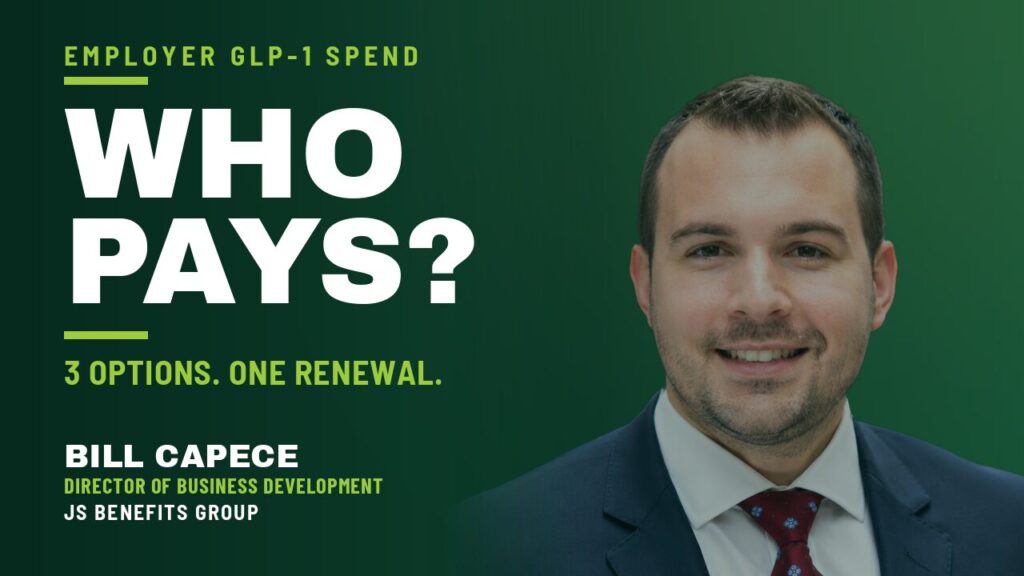

Should Your Health Plan Cover GLP-1s? What Every Employer Needs to Know Before Your Next Renewal
Watch the Video
Before diving into the details, watch our short video explaining the three most common approaches employers are taking when deciding whether to cover GLP-1 medications.
🎥 Watch on YouTube: https://youtu.be/8PJvqqXNcrc
For more employer resources, healthcare cost-saving strategies, and employee benefits insights, visit JS Benefits Group at https://jsbenefitsgroup.com.
If You’re Asking This Question, You’re Not Alone
Over the past two years, one question has come up in nearly every employee benefits renewal meeting:
“Should our health plan cover GLP-1 medications?”
Medications such as Wegovy®, Zepbound®, Ozempic®, and Mounjaro® have transformed the treatment of obesity and diabetes. They’ve also become one of the fastest-growing pharmacy expenses for employer-sponsored health plans.
For employers, the question isn’t whether these medications work. Numerous clinical studies have demonstrated meaningful weight loss and improvements in overall metabolic health for many patients. The real question is how to balance employee health with long-term healthcare affordability.
The answer isn’t the same for every employer.
A 30-person accounting firm has very different financial considerations than a 500-employee manufacturer operating a self-funded health plan. That’s why every decision should begin with your own claims data—not headlines or assumptions.
At JS Benefits Group, we help employers evaluate their healthcare claims, pharmacy spending, and plan design before renewal so they can make informed decisions that support both employees and the organization’s financial goals.
Learn more about our Employee Benefits Consulting services:
https://jsbenefitsgroup.com/employee-benefits-solutions/
Why GLP-1 Coverage Has Become Such a Big Issue
GLP-1 medications can cost hundreds of dollars per month after rebates and manufacturer discounts, with utilization continuing to increase across employer-sponsored health plans.
For many organizations, just a handful of employees taking these medications can significantly increase annual pharmacy spending.
That doesn’t automatically mean employers should exclude coverage.
It simply means GLP-1 decisions deserve thoughtful planning instead of becoming a last-minute renewal discussion.
The employers achieving the best results are reviewing:
- Pharmacy utilization
- Healthcare claims
- Employee demographics
- Funding arrangements
- PBM contracts
- Long-term healthcare strategy
before making changes.
Three Common Employer Strategies
Option 1: Cover GLP-1 Medications
Many employers choose to provide coverage because they view obesity as an important chronic health condition.
Potential advantages include:
- Improved employee satisfaction
- Stronger recruiting and retention
- Better management of obesity-related conditions
- Competitive employee benefits
- Support for long-term employee wellness
However, comprehensive coverage also creates the highest pharmacy cost exposure.
Many employers manage utilization by implementing:
- Prior authorization
- BMI requirements
- Physician documentation
- Lifestyle coaching
- Nutrition programs
- Step therapy
- Ongoing clinical reviews
These guardrails help ensure medications are prescribed appropriately while helping employers better manage long-term costs.
Option 2: Exclude Coverage for Weight Loss
Some employers continue covering GLP-1 medications for FDA-approved diabetes treatment while excluding coverage for weight management.
This approach offers the greatest immediate cost control.
However, employers should understand that excluding coverage doesn’t eliminate pharmacy expenses entirely.
Employees may also have questions or concerns, making communication especially important.
If this option is selected, employers should clearly explain:
- Why the decision was made
- What alternatives are available
- Wellness resources offered
- Other available benefits
Employee communication often determines how well these changes are received.
Option 3: The Middle Ground
Increasingly, employers are choosing a balanced approach.
Rather than offering unlimited coverage—or excluding these medications completely—they’re implementing strategies that provide access while managing costs.
Examples include:
- Prior authorization
- Clinical eligibility requirements
- Disease management programs
- Direct-pay programs
- Specialty pharmacy management
- Cost-sharing strategies
- Wellness participation requirements
For many employers, this provides employees with meaningful access while helping control long-term healthcare spending.
Don’t Forget Your PBM
One of the biggest mistakes employers make is focusing only on whether to cover GLP-1 medications while overlooking their Pharmacy Benefit Manager (PBM).
Your PBM plays a significant role in determining:
- Drug pricing
- Manufacturer rebates
- Formulary management
- Specialty pharmacy costs
- Prior authorization requirements
- Utilization management
A well-negotiated PBM contract can make a substantial difference in what your organization ultimately pays.
That’s why PBM strategy should always be part of the GLP-1 conversation—not an afterthought.
Your Funding Arrangement Matters
Whether your organization is:
- Fully insured
- Level-funded
- Self-funded
can significantly affect your options.
Many employers moving to Level-Funded Health Plans gain greater visibility into claims data while creating additional opportunities for long-term cost management.
Learn more:
https://jsbenefitsgroup.com/level-funded-health-plans/
Don’t Wait Until Renewal
One of the biggest mistakes employers make is waiting until 30 or 60 days before renewal to discuss GLP-1 coverage.
By then, many opportunities to improve pricing and redesign benefits have already passed.
The most successful employers begin planning months before renewal.
That allows time to:
- Review healthcare claims
- Analyze pharmacy spending
- Evaluate PBM performance
- Compare funding arrangements
- Consider level-funded options
- Update plan design
- Improve employee communications
Planning early creates better negotiating leverage and often leads to stronger renewal outcomes.
GLP-1s Are Only Part of the Story
GLP-1 medications often receive the headlines, but they’re only one part of an organization’s overall healthcare strategy.
Long-term healthcare cost management also includes:
- Healthcare claims analysis
- Preventive care
- Corporate wellness initiatives
- Chronic disease management
- Pharmacy management
- Employee education
- Plan design optimization
When these pieces work together, employers are often able to improve employee health while controlling future healthcare costs.
Learn more about our Corporate Wellness programs:
https://jsbenefitsgroup.com/corporate-wellness/
How JS Benefits Group Can Help
At JS Benefits Group, we help employers make informed employee benefits decisions—not emotional ones.
Our team provides:
- Employee Benefits Consulting
- Group Health Insurance
- Healthcare Claims Analysis
- Level-Funded Health Plans
- Self-Funded Health Plans
- PBM Strategy
- Healthcare Cost Containment
- Corporate Wellness Programs
- Employee Advocacy
- HR Consulting & Compliance
Whether you’re evaluating GLP-1 coverage or preparing for your next renewal, we’ll help you understand your options and build a benefits strategy that supports both your employees and your bottom line.
Explore our services:
Employee Benefits Solutions
https://jsbenefitsgroup.com/employee-benefits-solutions/
Group Health Insurance
https://jsbenefitsgroup.com/employee-benefits-and-group-health-insurance/
The Bottom Line
Should your health plan cover GLP-1 medications?
There isn’t one universal answer.
The right decision depends on your workforce, healthcare claims, funding arrangement, pharmacy strategy, recruiting goals, and long-term financial objectives.
Before your next renewal, make sure you’re evaluating the complete picture—not just the cost of one prescription.
At JS Benefits Group, we help employers throughout Pennsylvania, New Jersey, Delaware, Maryland, New York, and across the country analyze their healthcare costs, optimize employee benefits, and make informed decisions that support long-term success.
If you’d like to understand how GLP-1 coverage could affect your healthcare plan, we’d be happy to help.
📞 Schedule a Complimentary Consultation
https://jsbenefitsgroup.com/request-consultation-form-group-health-benefits/
🌐 Visit Us Online
Related Resources
- Employee Benefits Solutions
https://jsbenefitsgroup.com/employee-benefits-solutions/ - Group Health Insurance
https://jsbenefitsgroup.com/employee-benefits-and-group-health-insurance/ - Level-Funded Health Plans
https://jsbenefitsgroup.com/level-funded-health-plans/ - Corporate Wellness
https://jsbenefitsgroup.com/corporate-wellness/ - HR & Employee Benefits Blog
https://jsbenefitsgroup.com/blog/ - YouTube Channel
https://youtu.be/8PJvqqXNcrc
How Can I Reduce Employee Health Insurance Costs in Bucks County, PA?
Employee Benefits Consulting in Bucks County: Strategies to Control Rising Healthcare Expenses
How Claims Experience Impacts Your Group Health Insurance Renewal
Formulary Management: How Employers Can Control Pharmacy Benefit Costs